We audited over 1,000 skincare products in our database to look at pricing and ingredients to see how that stacks up to the marketing language. Here’s what we found.
Fragrance allergens are in 26% of products
The EU requires cosmetics brands to disclose 26 specific fragrance ingredients on the label because they’re known skin sensitizers or allergens. This includes ingredients such as linalool, limonene, and citronellol. While we don’t have the same requirements in the US, it’s important for those with sensitive skin to know what’s in their skincare products.
This post may contain affiliate links. Read the full disclosure here
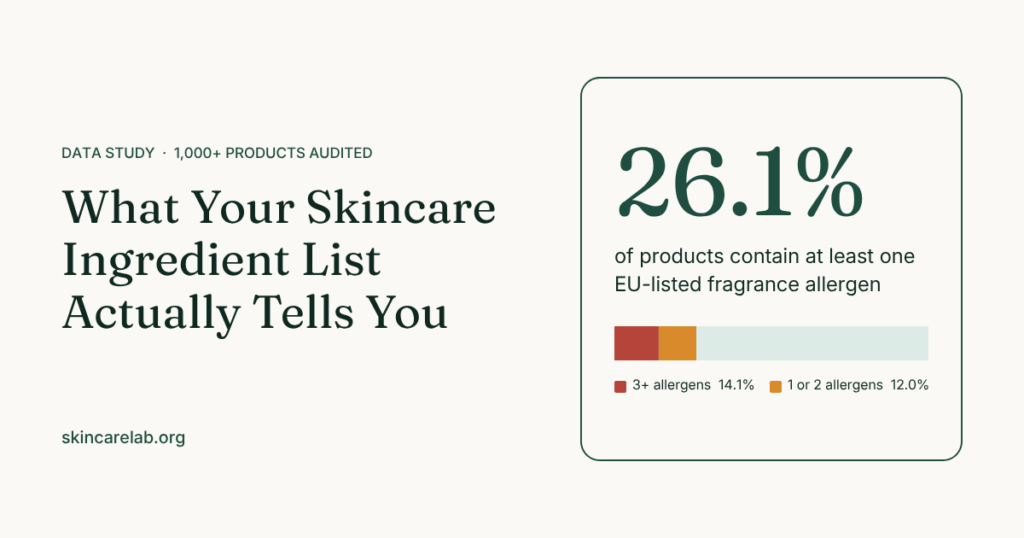
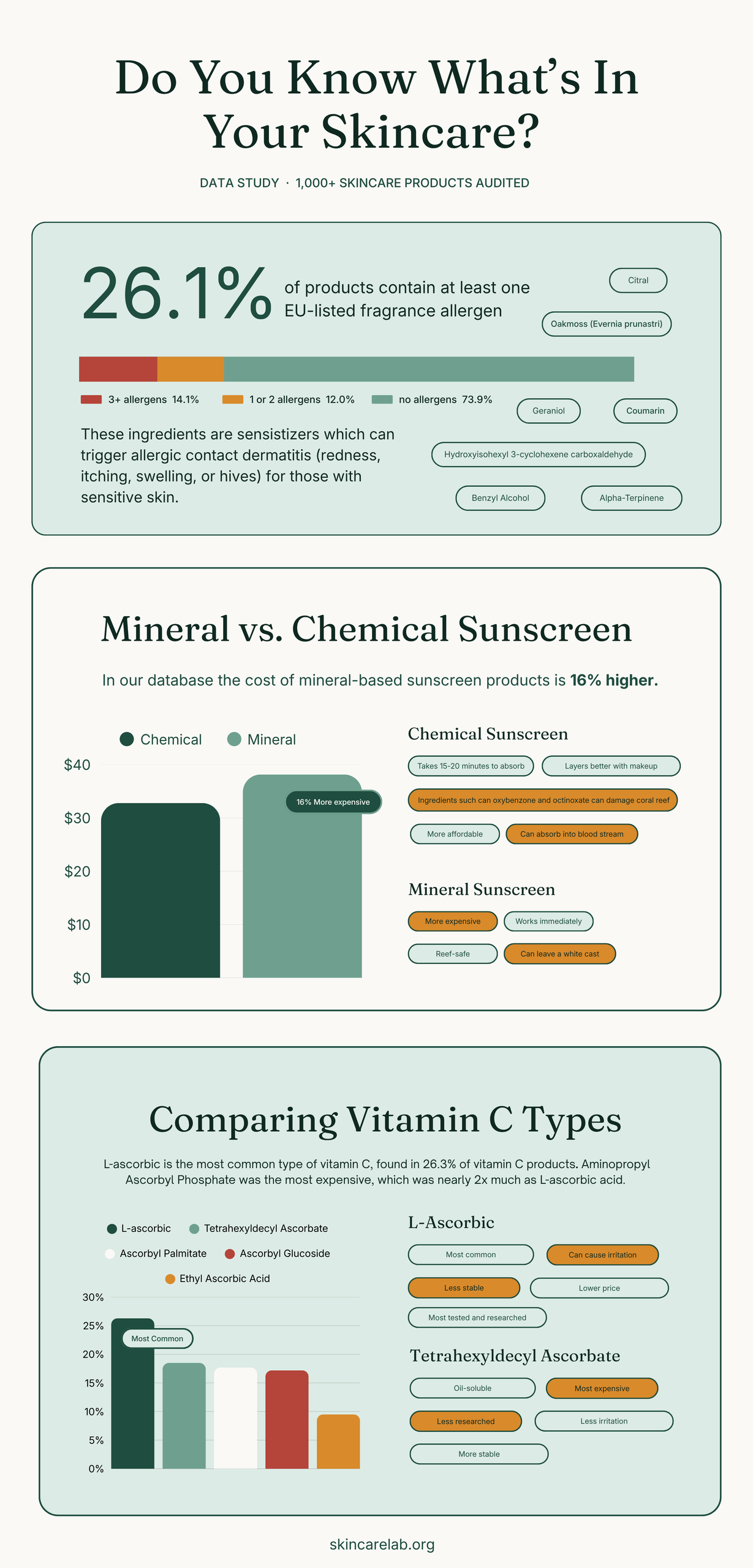
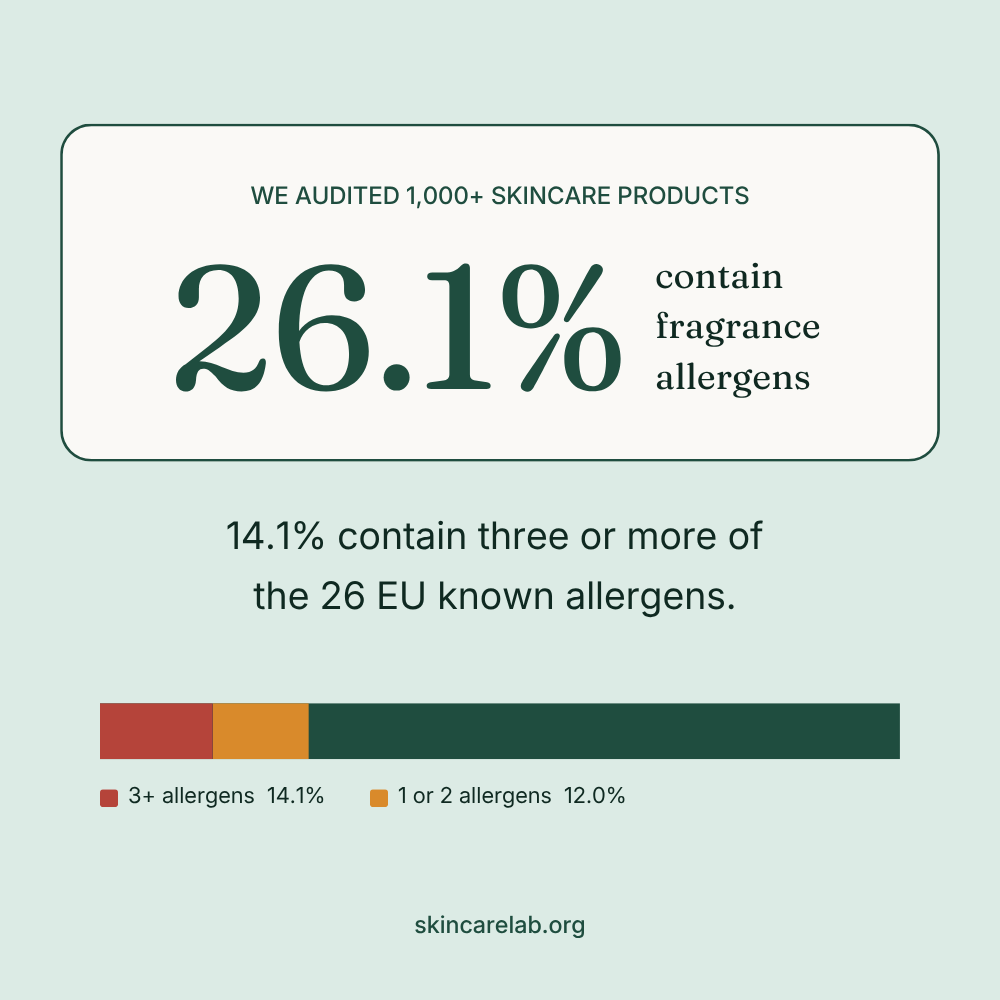
In our database, 26.1% of products contain at least one fragrance allergen, and 14.1% have three or more. For many skin types, this isn’t an issue. But if you have sensitive skin or a known fragrance allergy, you’ll want to watch out for these.
Check out Charlotte Tilbury’s Magic Serum with Vitamin C, for instance. This product uses a wide range of effective ingredients such as niacinamide, vitamin C, hyaluronic acid, and lactic acid. But it has five different ingredients that are on the EU allergen list: limonene, geraniol, citronellol, linalool, and citral.
It’s important to note these ingredients aren’t toxic but they’re sensitizers, meaning they can trigger allergic contact dermatitis (redness, itching, swelling, or hives) for those with pre-existing fragrance allergies.
When in doubt, check the ingredient list. You can find the full list of EU allergen ingredients here.
The Most Expensive Type of Vitamin C
You’ll find a wide range of Vitamin C ingredients in skincare, each with their own benefits and tradeoffs. So which are the most common and what’s the difference in price?
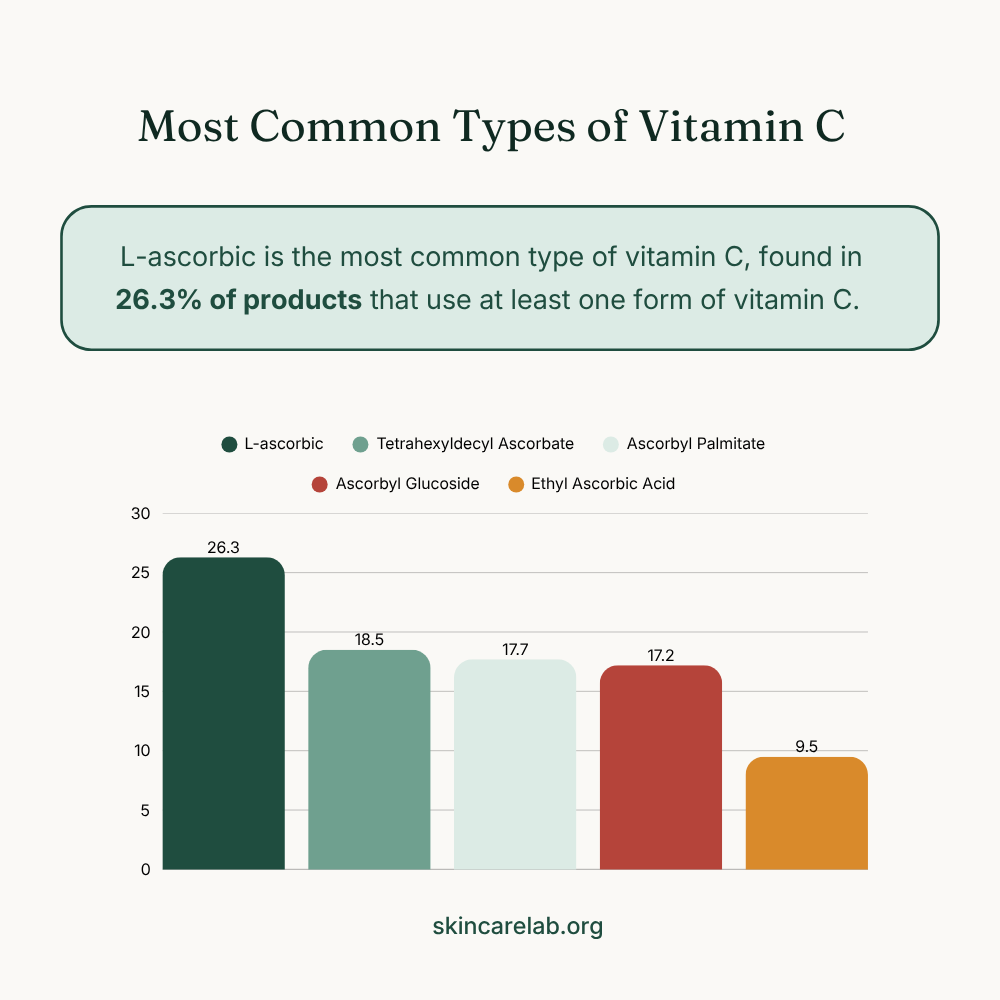
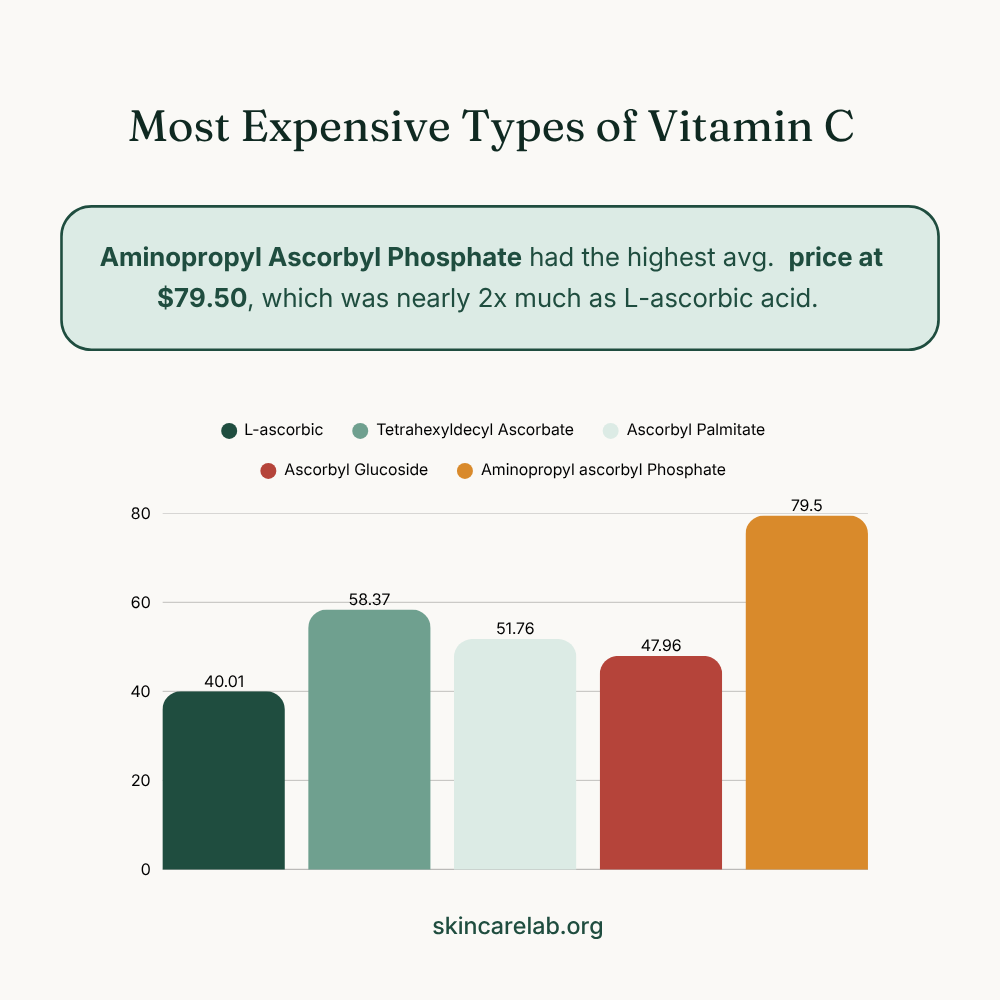
In our database, 20.9% of products contain some form of vitamin C. Not surprisingly, L-ascorbic acid was the most common, present in 26.3% of vitamin C products. Next came tetrahexyldecyl ascorbate and ascorbyl palmitate, two oil-soluble forms each appearing in 17-19% of vitamin C products. We found these two oil-soluble versions were more expensive on average at $48-58 compared to $40 for L-ascorbic acid products.
Magnesium ascorbyl phosphate and sodium ascorbyl phosphate were less common, showing up in 8-9% of vitamin C products. These are two gentler, water-soluble derivatives often used in sensitive skin formulations. Aminopropyl ascorbyl phosphate stood out as the priciest vitamin C form at $79.50 on average, although this is based on a small sample of products.
L-ascorbic acid is the most common, most studied, and most bioavailable form of vitamin C. It’s generally considered the gold standard with studies showing its ability to boost collagen production and fight free radical damage. The biggest downside is that it’s unstable. L-ascorbic acid breaks down quickly when exposed to air, light, and heat. As it degrades, it loses effectiveness. It also needs an acidic environment (below 3.5) to penetrate skin. This range can lead to stinging and irritation, particularly for sensitive skin types.
The derivative forms exist to solve that problem, and the tradeoff is part of what you’re paying for. Tetrahexyldecyl ascorbate and ascorbyl palmitate are more stable and easier on skin. However, they rely on your skin converting them into usable ascorbic acid, a conversion process that’s less studied than L-ascorbic acid’s own mechanism. Magnesium and sodium ascorbyl phosphate follow the same approach on the water-soluble side, formulated to skip the low pH requirement that makes L-ascorbic acid effective but harder to tolerate.
Some of the least common forms in our database were ethyl ascorbyl ether, ascorbyl tocopheryl maleate, and 3-O-cetyl ascorbic acid.
Dig deeper into the 8 most common types here.
Mineral vs. Chemical Sunscreen and the Cost Difference
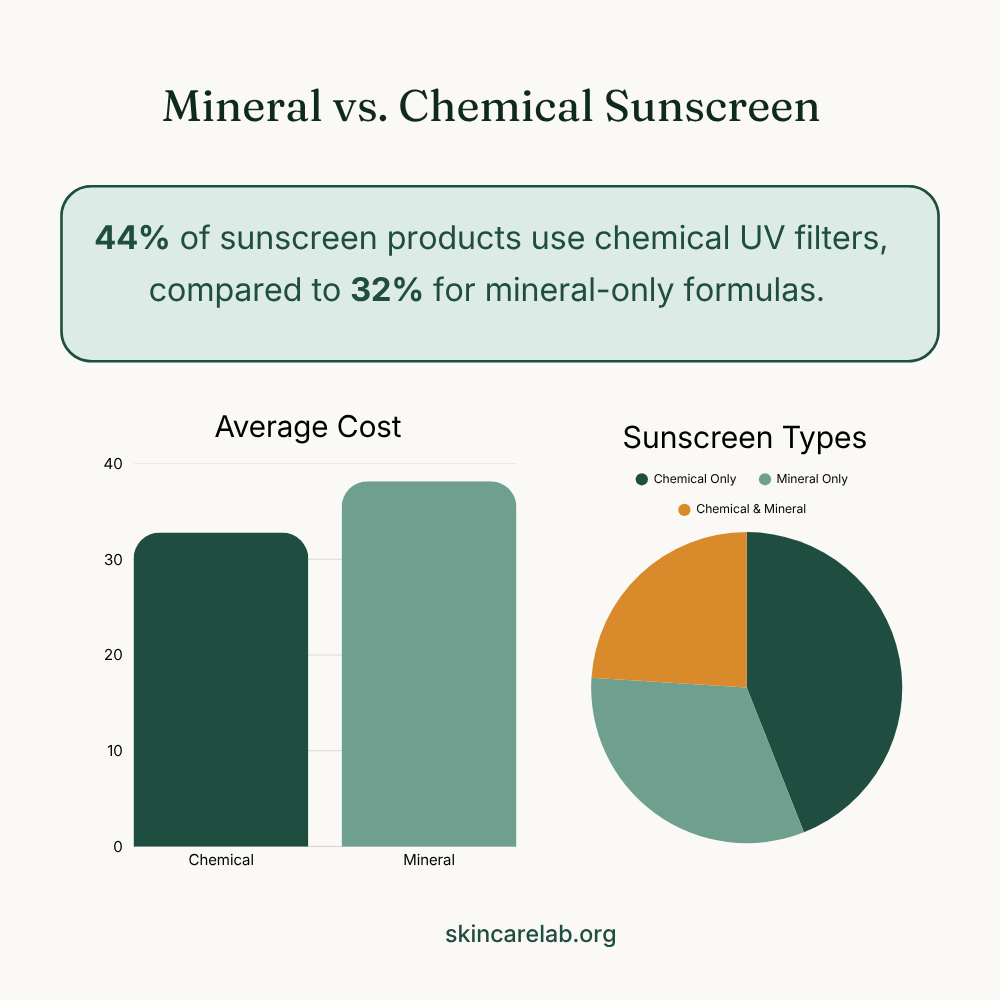
Among the sun protection products in our database, chemical UV filters were the most common at 44%, compared to 32% for mineral-only formulas. The remaining 24% used a combination of both mineral and chemical protection. Mineral-only formulas average $38.16, about 16% more than the $32.80 average for chemical-only formulas.
The two sunscreen types work differently, which explains the price and formulation differences. Chemical filters such as avobenzone, octisalate, homosalate, and octocrylene absorb UV radiation and convert it to heat that the skin releases. These generally need 15 to 20 minutes to absorb for full effectiveness. Mineral filters such as zinc oxide and titanium dioxide sit on top of the skin instead of absorbing. These work mostly by reflecting and scattering UV radiation. They’re effective as soon as they’re applied, which is one reason dermatologists often point to them for reactive or sensitive skin.
Mineral sunscreen popularity has grown for a few specific reasons, not just a general trend. A 2019 FDA-led study found that several common chemical filters, including avobenzone, oxybenzone, and octocrylene, were absorbed into the bloodstream at levels above the threshold that normally triggers further safety review. They aren’t deemed unsafe by the FDA, but more research and data are needed. In addition, Hawaii and a handful of other places banned the sale of sunscreens containing oxybenzone and octinoxate since they can lead to coral reef damage. This is why you now see sunscreen products marketed as “reef-safe.” In recent years, formulations have reduced the white cast that is sometimes left with mineral sunscreen. This and more scrutiny on chemical filters are why we’re seeing the increase in mineral sunscreen.
The tradeoffs go both ways. Chemical sunscreens are generally thinner, rub in without leaving a cast, and layer better under makeup. Mineral sunscreens work immediately and are usually the gentler choice for sensitive or reactive skin, but even with modern micronized formulas they can still sit heavier on skin and are more likely to leave a white cast.
Where did this data come from?
Every number above comes from our own product and ingredient database. This data is not based on a survey or a third-party report. We cross-referenced fragrance content against the EU’s list of 26 ingredients requiring allergen disclosure, matched vitamin C and sunscreen filter ingredients against full ingredient lists.